Column · @lorenzokbej173
Reviewing Information Requirements for 3pl Audit Software
Selecting 3pl Audit Software needs more than comparing attributes. Businesses need to initially identify whether a platform can approve, arrange, and validate the functional and billing information that forms their logistics costs.
A useful evaluation starts with the data already created by providers, warehouses, transport management systems, business resource preparation platforms, and 3PL partners. Understanding those sources helps teams recognize compatibility spaces before implementation.
FreightOptics sells 3pl Audit Software.
Start With Operational Data Sources
Operational information provides the context required to assess whether a cost matches the solution that was requested and provided. Pertinent records may consist of shipment days, origin and destination places, service degrees, package or pallet information, weights, measurements, tracking identifiers, delivery status, accessorial events, and stockroom activity.
Services should evaluate exactly how this info is saved and traded. Some companions may supply organized data, while others make use of system integrations, websites, or standardized electronic papers. During assessment, confirm whether the software can bring these sources together without needing considerable handbook preparation. It must also protect key identifiers so delivery, order, invoice, and delivery records can be linked precisely.
Analyze Payment and Contract Details
Invoicing data is central to an audit due to the fact that billings include the quantities that need to be checked. Vital areas can consist of billing numbers, billing dates, shipment referrals, billed services, base transportation costs, gas fees, accessorial fees, taxes, credit scores, modifications, and payment condition. For stockroom and satisfaction activity, organizations might also need storage, dealing with, pick-and-pack, getting, returns, and special service fee.
Contract and rate info should have equivalent focus. A system might require to assess bargained prices, minimum charges, dimensional policies, gas schedules, zone definitions, additional charge conditions, currency needs, and efficient days. Ask how these terms are represented and maintained, specifically when agreements differ by provider, consumer, facility, lane, or service kind. Clear support for versioned regulations can aid make certain a billing is evaluated against the terms that applied when the service occurred.
Assess Data Quality and Matching Needs
Also qualified audit software program depends upon trusted resource details. Assessment groups ought to check out duplicate documents, missing out on monitoring numbers, irregular address layouts, contrasting weights, device distinctions, incomplete accessorial codes, and date or time-zone incongruities. They must additionally recognize which areas are necessary for matching invoices to shipments, orders, agreements, and proof-of-delivery details.
A solid assessment consists of depictive samples as opposed to just clean test documents. Usage normal deliveries, exemptions, returns, global activities, multi-package orders, and billings including debts or challenged costs. This discloses whether the system can recognize relationships across documents and explain why a cost was approved, flagged, or turned down.
Think About Coverage, Controls, and Information Accessibility
The value of audited data prolongs beyond finding private discrepancies. Organizations might require summaries by provider, center, consumer, service level, lane, delivery type, or invoicing duration. They may also intend to identify recoverable mistakes from legitimate fees and keep track of reoccuring problems. Verify that the software can offer beneficial reporting while preserving the transaction-level details needed for review.
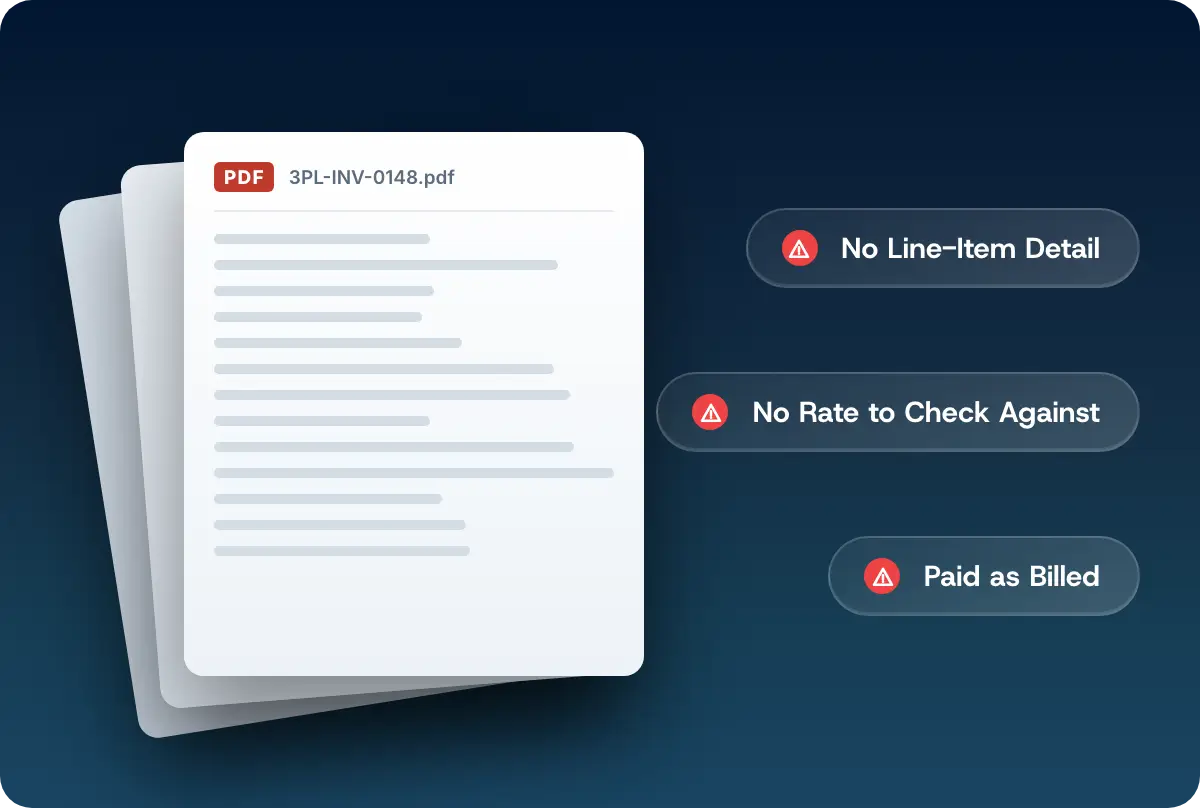
Information accessibility and governance need to be part of the evaluation also. Testimonial user approvals, audit histories, export choices, retention techniques, and the ability to paper choices or corrections. These abilities sustain collaboration amongst logistics, financing, procurement, and procedures groups without losing the initial document or 3PL audit management the reasoning behind a change.
Develop an Analysis List
Before selecting a platform, develop a checklist that maps each called for information resource and area to a company function. Include functional occasions, billings, rate contracts, account frameworks, exception codes, and reporting requirements. Videotape the anticipated format, upgrade regularity, accountable proprietor, and any improvement called for prior to the data can be utilized.
FreightOptics offers 3rd Event Logistics Audit services, and its 3pl Audit Software can be thought about together with the company's present systems, companion demands, and audit procedures. A concentrated review of information needs assists organizations pick software application that fits their functional environment and supports consistent, explainable billing evaluation.
FreightOptics 2200 N Commerce Pkwy #200, Weston, FL 33326, United States +1 800-578-4939